
Our Purpose
Please meet the 74 reasons we exist!
As a rescue organization, the majority of our residents come from horrific situations.
Please keep this in mind as you browse their stories and be aware that some of this information might be triggering.
Bantam Chickens


_heic.png)

- About Rooster Dumping -
Unfortunately, rooster dumping is a common occurrence. In the spring, chicks are sold for just a few dollars each at farm stores, and they are all too often purchased impulsively by buyers who aren’t aware of what caring for chickens fully entails. Despite what hatcheries claim, sexing baby birds is exceptionally difficult -- and even if someone purchases all “hens” they are very likely to end up with several roosters. Due to prohibitive zoning laws, ordinances, and/or the overwhelming negative stigma that unfairly paints roosters as aggressive, loud,or “unnecessary” , these “oops” roosters are typically unwanted. Unfortunately, the result is that many of these roosters are dumped in the wild to fend for themselves.
Survivors Of Cockfighting


- About Cockfighting Mutilation -
In the cockfighting realm, most roosters undergo a procedure called dubbing. “Dubbing” is the practice of removing a rooster’s comb, wattles, and sometimes even their earlobes. This is done without anesthesia or pain medication, and is extremely risky for the bird as it can result in infection, necrosis, or even death if the bird goes into shock. Most of the time dubbing is done to prepare a rooster
for being fought, so that their combs and wattles cannot be grabbed during a fight. Even if a rooster is not being fought, dubbing is often still performed for aesthetic purposes or to make a rooster adhere to a “breed standard” so they can be shown at a fair or competition. In addition to being dubbed, cockfighters also remove a rooster’s natural spurs so that a fighting implement, called a gaff, can be affixed to the rooster’s legs instead. Gaffs are sharp knives or razor blades that are designed to amplify injury when a rooster kicks his opponent, so that the maximum amount of pain and bloodshed will occur during a fight. It is hard to imagine these gentle, intelligent, friendly birds being subjected to such torturous cruelty.
Standard Chickens


- About "Chick Days" -
Each spring, millions of baby chickens, ducks, guinea fowl, turkeys, and game birds are sold at feed stores. Dubbed “chick days”
, this time of year is marketed as a wholesome, exciting experience for the whole family. The reality, however, is far different than what is advertised. The cute, peeping chick who you see in the brooder at the feed store started their life at an industrial hatchery. After hatching,
workers inspected them. If they were determined to be weak, deformed, or a rooster, they were killed immediately either by being macerated alive or suffocated with gas. If they were lucky enough to survive the inspection phase, when they were merely a few hours old they were put in a box with no food, water, or supplemental heat and shipped through the mail to the feed store. The postal service is hardly a safe mode of transportation (especially if you are a delicate baby bird) and due to extreme temperature fluctuations, less than gentle
handling, or stress, many do not survive the journey. Even if they do make it all the way to the feed store, the likelihood of them being purchased by a responsible caretaker who will protect them from predators, take them to the veterinarian when they are sick or injured, and allow them to live out their full lifespan is very small. Many birds purchased during chick days are later abandoned after their guardians grow bored with them, or are outright killed once they stop “producing” enough for their guardians to turn a profit. Chick days is a tragedy that results in millions of casualties every year. No animal deserves to be shipped through the mail. No animal deserves to be treated as a toy or holiday decoration. No animal deserves to be abandoned. If you are interested in adding farmed birds to your family, we urge you to skip the feed store, hatchery, or breeder and instead choose adoption! Adopt don’t shop applies to every species!
Cornish Cross Chickens
- About the Stigma of Cornish Cross Chickens -
Before we introduce you to our beloved "Cornies", we wanted to share some information about their breed.
Cornish Cross and other large breed chickens (referred to as “broilers” by the meat industry) have been selectively bred by humans exclusively for the purpose of increasing both their body mass and growth rates. Birds who grow larger, faster, are more efficient to raise and slaughter in vast numbers which increases overall profitability for large scale farming operations. Their large size and rapid growth rate, unfortunately, predisposes them to many health issues such as bumblefoot, osteoarthritis, and cardiac disease. Farms use these potential medical concerns to justify slaughtering them, claiming that Cornish Cross chickens cannot live long, healthy lives and that in fact it is “humane” to kill them at merely 42 days of age. However, here in sanctuary we are proving that when given the chance Cornish Cross chickens can not only survive, but thrive! Our Cornish Cross residents all eat a very closely monitored, restricted diet that is low in protein and sugar. Their favorite treats are a variety of lettuces and hydrating vegetables like cucumbers and squash, which they munch on throughout the day between breakfast and dinner! This specialized diet keeps our Cornish Cross residents fit and trim, which helps to prevent them from developing osteoarthritis or cardiac issues. When set up for success, Cornish Cross chickens can indeed live long, happy, fulfilling lives -- the same as any other breed of chicken!


- About Kaporos -
Kaporos is a religious ritual practiced by some ultra-Orthodox practitioners of the Jewish faith. In this ritual, practitioners swing a chicken over their heads while a prayer is spoken in order to symbolically transfer the sins of the practitioner to the bird. The bird is then slaughtered. Every year before Yom Kippur in Brooklyn, New York, pop up slaughterhouses are erected right in the middle of the street as
hundreds of thousands of baby chickens are trucked in from farms to be sacrificed for this ritual. For days the baby birds wait in overcrowded transport crates without food, water, or protection from the elements until it is their turn to be used for the ritual and ultimately killed. Each year, we go to New York to give them food and water while they wait and offer them what is likely the only
compassion they have ever or will ever know in their short, brutal lives. While Kaporos offers us a unique opportunity to view these birds and their suffering up close, it is important that we stress that these are the same exact birds who end up at the grocery store. They grow up on the same farms, are packed into the same crates, and are transported in the same trucks. The ONLY difference is that instead of being transported to the “regular” slaughterhouse, they are transported to Brooklyn to be slaughtered on the street. Regardless of where they are, all of these baby birds want to live. They want to feel the warmth of the sun and scratch the cool earth with their feet. They want to run and flap their wings and experience life. Please don’t be the reason they can’t. There are several compassionate alternatives to the use of chickens as Kaporos, such as using money instead. If you are interested in supporting an end to the use of chickens as Kaporos, please check out: www.EndChickensAsKaporos.com
Sheep


Peafowl


Dogs


Cows


Ducks


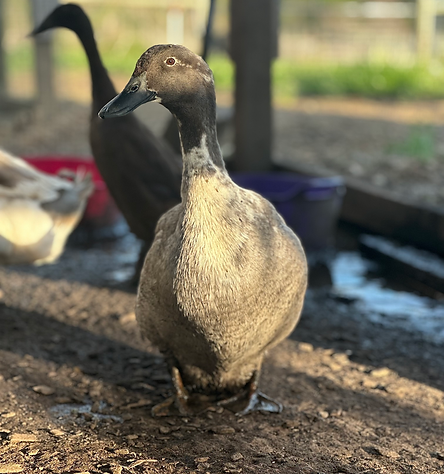

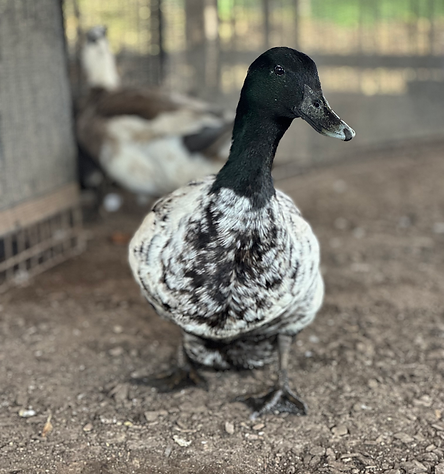


- About "Duck Dumping" -
Every spring, millions of ducklings are purchased at feed stores and from hatcheries. Unfortunately, the vast majority of these birds are purchased impulsively, by individuals who were enamored by their cute, fluffy faces and tiny, adorable peeps but were not prepared for the reality of caring for them. Ducklings are very messy and grow incredibly quickly, and unsuspecting caretakers can
quickly become overwhelmed. Heartbreakingly, when their ducks have grown too large or they simply don’t find them entertaining anymore, many guardians choose to abandon their domestic ducks on public ponds and lakes. Domestic ducks, however, are just that – domestic. They have been selectively bred to have large bodies, and their large size means that the vast majority of them are unable
to fly. This makes them literal sitting ducks for predators, as they cannot escape predation via flight the way their wild cousins can. Unfortunately, even if they do manage to survive for a short time in the wild, they can spread diseases to and
interbreed with wild ducks. The resulting offspring of such breeding are called “hybrids” , and they are typically too heavy to fly or migrate properly. All in all, it is in the best interest of the domestic ducks themselves AND the ecosystem as a
whole for them to be rescued if they are dumped out in the wild – or better yet, to not be dumped in the first place!
- About Crested Ducks -
The “crest” on a crested duck is actually the result of a hole in the bird’s skull -- the floofy head feathers are the body’s attempt at covering and protecting the vulnerable brain. Feathers, however, do not protect anywhere near as effectively as bone, and that hole in their skulls unfortunately puts these birds at an extremely high risk of neurological problems and brain injuries. Crested ducks are enormously popular, and breeders selectively breed them to have the largest, most dramatic poofs possible. These birds are bred to have literal holes in their
skulls for aesthetics. It is hard to imagine something more incomprehensibly cruel.
Budgiediers


Pheasants
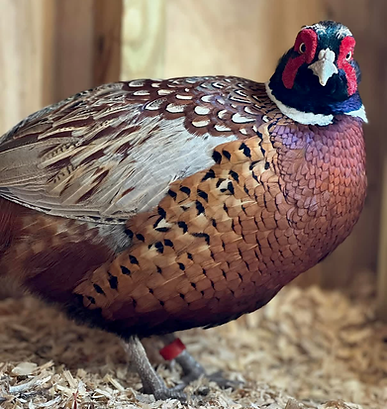


- About Pheasants -
The most common species of pheasant found in the United States is the Ring-necked pheasant. Native to China, Ring-necked pheasants are bred in captivity all over the United States to be released for hunting. These captive bred pheasants are far from their native habitat and rarely survive more than a few days after being released, succumbing to starvation, the elements, or predation — and that’s only if they manage to avoid the hunters. Besides Ring-necked pheasants, there are many more species of pheasants that are not commonly
used for hunting but are unfortunately growing ever more popular among collectors due to their breathtaking beauty. Unlike other species of farmed birds like chickens or ducks, pheasants have not been domesticated and are still very much wild animals. Unfortunately, being so far from their native habitat and having been provided for by humans since the day they hatched, captive bred pheasants cannot be released to live the wild lives they deserve. They simply do not have the skills they would need to survive, thanks to human interference. Isn’t
it bizarre that it is legal to breed and release non-native wildlife halfway around the world from their native habitat – especially in the name of “conservation”? We love our pheasant friends and are so honored to give them sanctuary, but it is a tragedy that such magnificent creatures should ever need sanctuary in the first place.
Quail


Chukar Partridges


Sponsor Us!
We are finalizing our Sponsorship Program and are hoping to roll it out soon!
Stay tuned!
